
Insulin Resistance Symptoms: Why They’re Easy to Miss—and What to Do Next

Maybe you have noticed that your energy crashes in the afternoon. You feel hungry again shortly after eating. Losing weight seems harder than it used to, or you find yourself reaching for something sweet whenever stress or fatigue hits.
It is tempting to assume these experiences mean you have insulin resistance.
But the truth is more complicated.
Fatigue, cravings, brain fog, weight changes, and difficulty concentrating can have many possible causes. They may be worth discussing with your healthcare provider, but they cannot diagnose insulin resistance on their own.
In fact, insulin resistance and prediabetes frequently develop without noticeable symptoms. That is one reason laboratory testing and a complete review of your health history matter.
What Does Insulin Resistance Actually Mean?
Insulin is a hormone that helps move glucose from your bloodstream into your cells, where it can be used for energy.
When insulin resistance develops, cells in the muscles, liver, and fat tissue do not respond to insulin as effectively as they should. The pancreas may compensate by producing more insulin to keep blood glucose within an acceptable range.
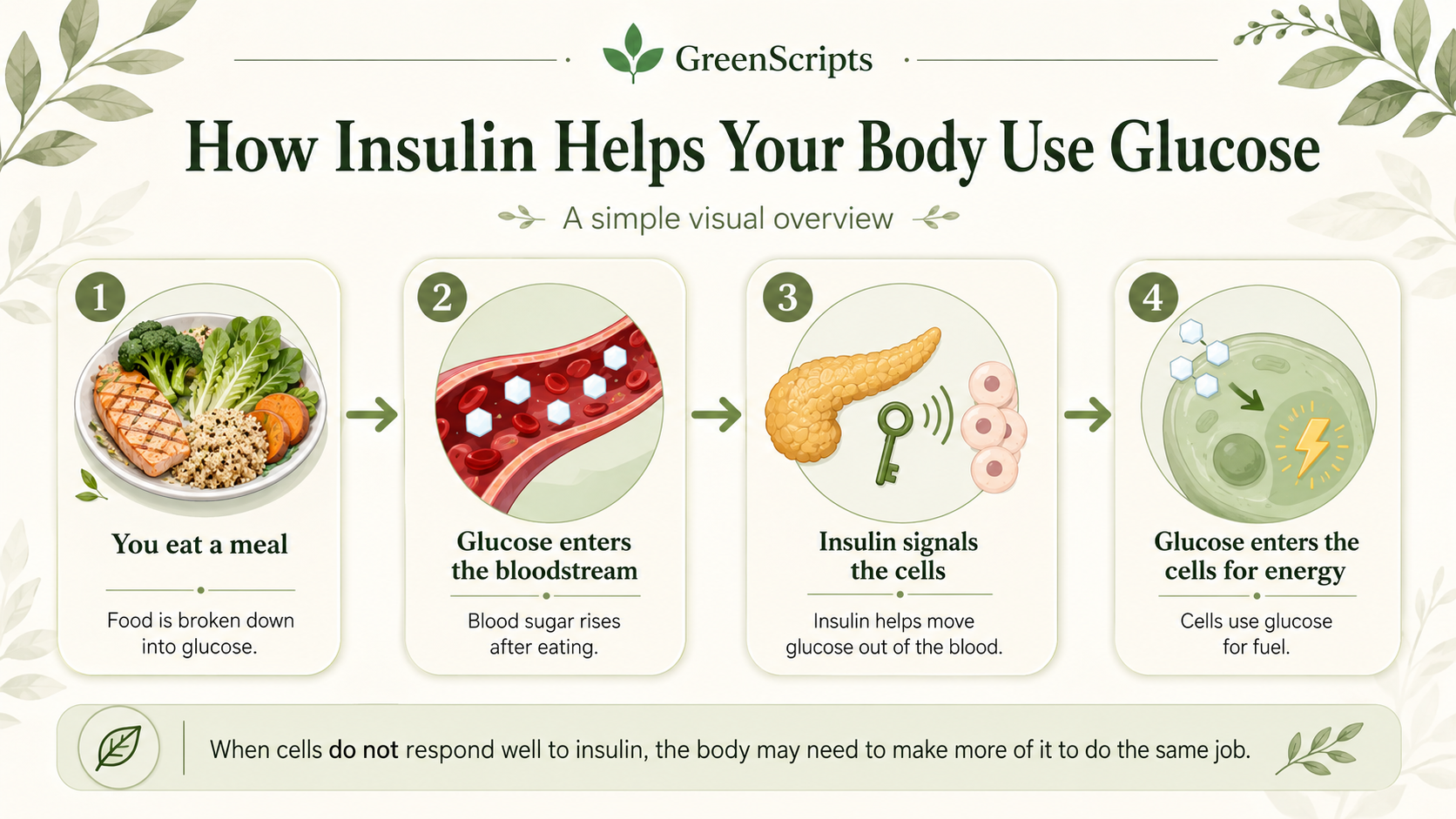
For a while, routine glucose results may still appear normal. Over time, however, the body may have greater difficulty compensating, allowing blood glucose levels to rise. This can eventually contribute to prediabetes or type 2 diabetes.
That progression does not happen overnight. It also does not look exactly the same for everyone.
Genetics, age, activity level, body composition, sleep, medications, hormonal changes, and other health conditions can all affect metabolic health. This is why GreenScripts focuses on understanding patterns rather than blaming one food, one habit, or one laboratory number.
Why Symptoms Can Be Misleading
People sometimes associate insulin resistance with:
Afternoon energy crashes
Frequent hunger or cravings
Difficulty losing weight
Brain fog
Increased waist circumference
Feeling sleepy after meals
These experiences may occur alongside blood sugar problems, but they are not specific enough to confirm insulin resistance.
Fatigue, for example, can also be connected to thyroid dysfunction, inadequate sleep, anemia, nutritional deficiencies, stress, medication effects, hormonal changes, or many other concerns.
The most useful question is not simply, “Do I have the symptoms?”
It is:
What do my symptoms, health history, habits, and laboratory results reveal when we look at them together?
Your healthcare provider may use tests such as fasting glucose, hemoglobin A1C, or other testing appropriate to your individual history when evaluating metabolic health. Symptoms such as increased thirst, frequent urination, blurred vision, unexplained weight loss, or wounds that heal slowly deserve prompt medical evaluation.
You Do Not Need a Perfect Diet to Begin
One of the biggest obstacles we see is the belief that improving metabolic health requires a complicated meal plan, expensive specialty foods, or an immediate overhaul of your entire life.
It does not.
Sustainable change is usually built through repeatable decisions:
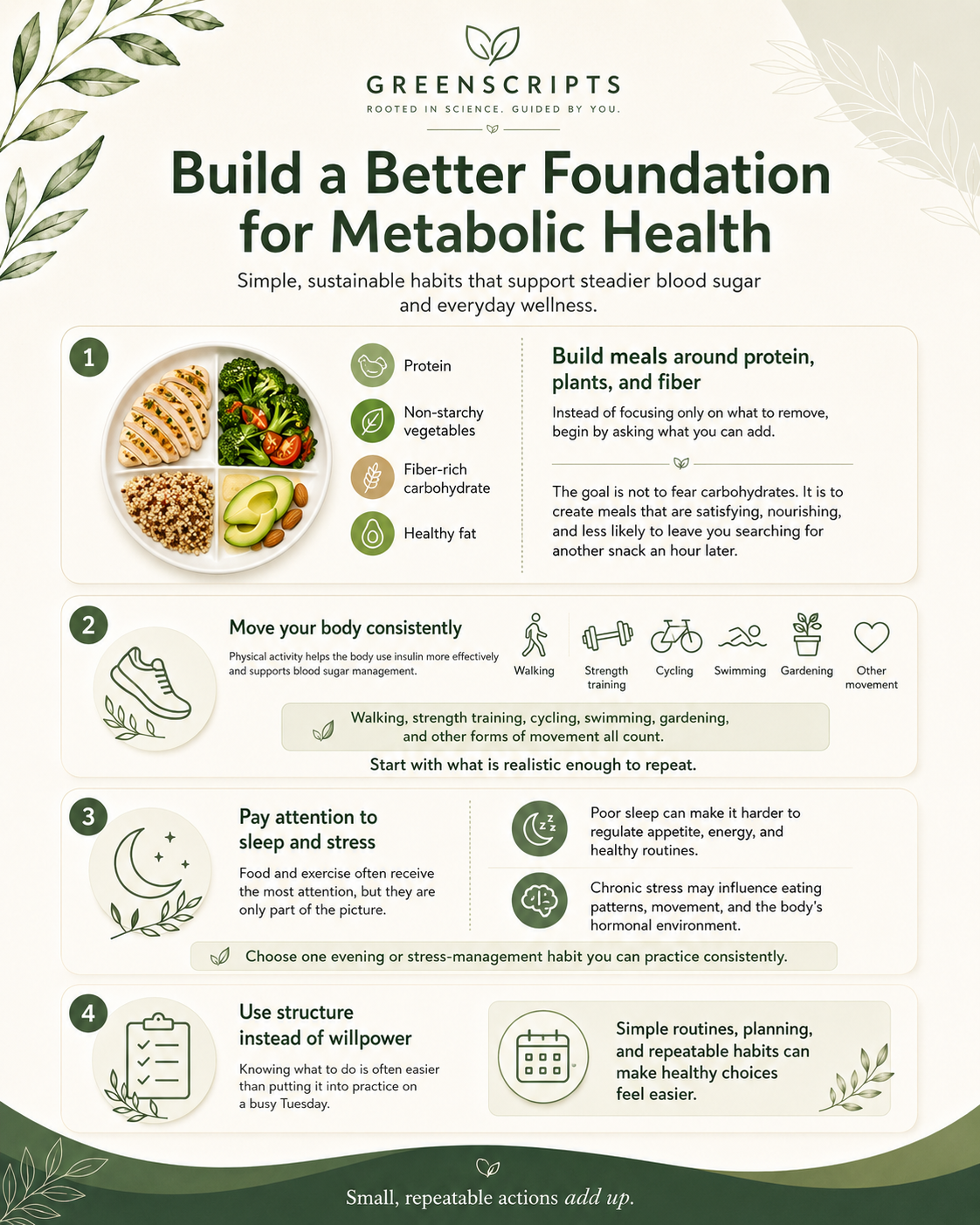
That is why we created the GreenScripts 7-Day Insulin Resistance Reset Toolkit. It provides a realistic meal plan, grocery list, daily tracker, quick-start guide, continuation plan, and practical education designed to help you turn general advice into an organized first week.
When Laboratory Results Can Add Clarity
Laboratory values should never be interpreted in isolation.
A number that falls within a laboratory’s reference range may still need to be considered alongside:
Your symptoms
Previous results and trends
Medications and supplements
Family history
Hormonal changes
Sleep and activity patterns
Other medical conditions
Likewise, one unexpected result does not always tell the whole story.
The goal is not to become anxious about every number. It is to understand which patterns deserve attention and what next steps are appropriate for you.
For Florida residents seeking individualized guidance, GreenScripts also offers a focused laboratory review consultation using recent test results. This is separate from the educational toolkit and is intended for people who need personalized clinical interpretation.
A Reset Should Be a Beginning, Not a Punishment
The word “reset” can sound like restriction, detoxing, or trying to undo everything you ate last weekend.
That is not what we mean.
A GreenScripts reset is a short period of intentional structure. It gives you room to observe your meals, energy, hunger, movement, and routines without expecting perfection.
Seven days will not solve every metabolic concern. But seven organized days can help you:
Prepare more balanced meals
Notice patterns you had been overlooking
Reduce decision fatigue
Establish a few repeatable habits
Create better questions for your healthcare provider
Decide what changes feel sustainable beyond the first week
That is meaningful progress.
Start With the Next Practical Step
You do not need to wait for the perfect Monday, the perfect grocery haul, or the perfect level of motivation.
Begin with one balanced breakfast. Take a walk after dinner. Schedule the laboratory testing you have been postponing. Prepare tomorrow’s lunch before the day becomes busy.
And when you want a complete plan to guide your first week, the GreenScripts toolkit is ready to walk you through it.
Ready for a More Structured Starting Point?

You do not have to piece everything together on your own. The 7-Day Insulin Resistance Reset Toolkit combines practical education, a complete meal plan, grocery list, daily trackers, and step-by-step guidance to help you begin with clarity—without overcomplicating the process.
Instant digital access · Complete toolkit for $27
