
Hashimoto’s Symptoms: Why You May Still Feel “Off”—and What to Do Next
Maybe you are taking thyroid medication and your latest TSH result falls within the laboratory reference range—but you still do not feel like yourself.
You are tired even after a full night of sleep. Your thinking feels slower. Your hair or skin has changed. Your weight seems harder to manage, your digestion feels sluggish, or you are more sensitive to cold than the people around you.
It is tempting to assume that every symptom is coming from Hashimoto’s—or that a “normal” result means nothing is wrong.
But the truth is more complicated.
Hashimoto’s can affect thyroid function over time, yet many symptoms associated with an underactive thyroid are also common in other conditions. That is why symptoms, laboratory results, medications, health history, and daily patterns need to be considered together—not one at a time.
What Does Hashimoto’s Actually Mean?
Hashimoto’s thyroiditis is an autoimmune condition. The immune system produces antibodies that target the thyroid gland, creating inflammation that may gradually interfere with the gland’s ability to make enough thyroid hormone.
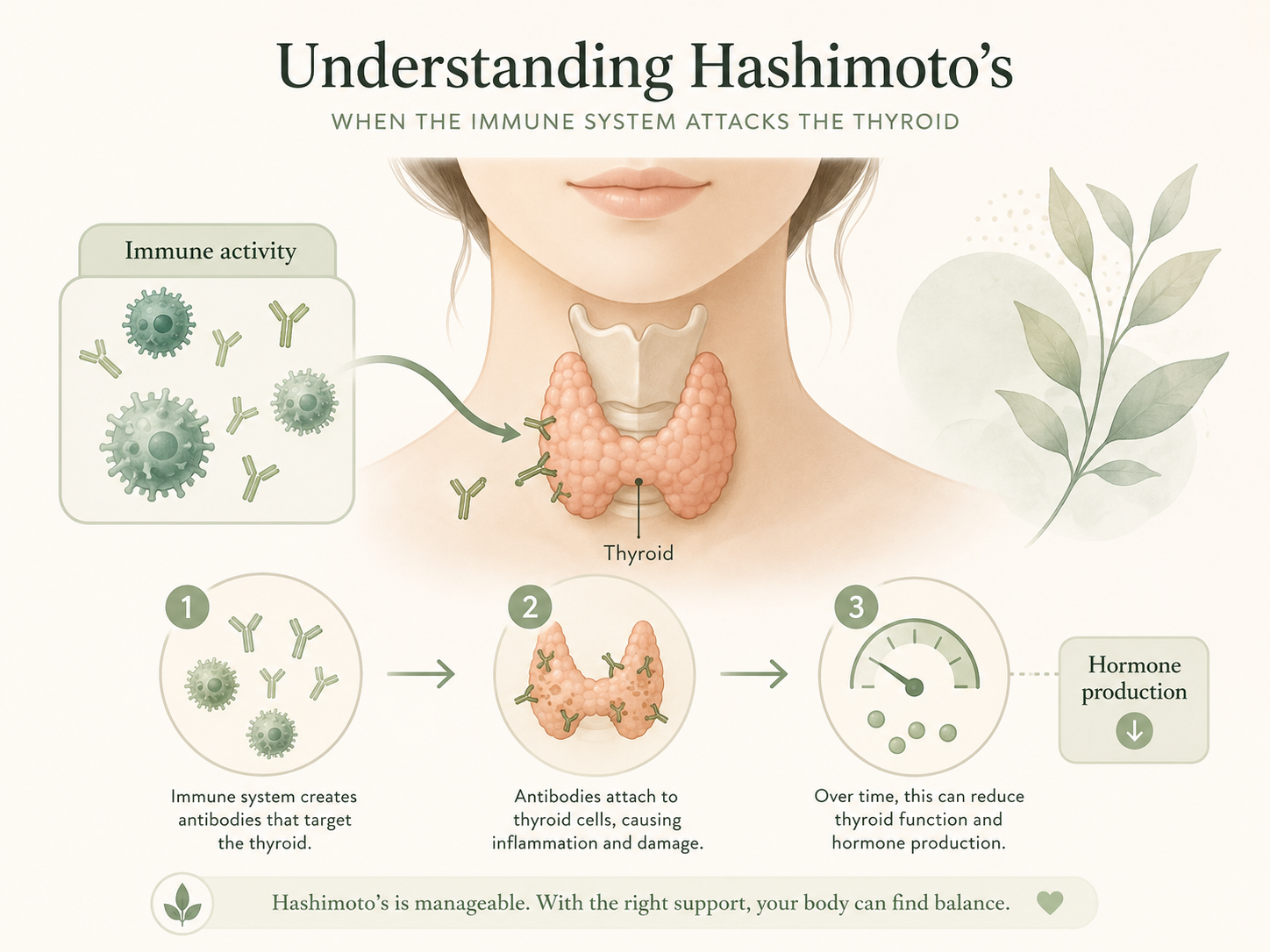
Some people have thyroid antibodies before they develop hypothyroidism. Others are diagnosed after blood testing shows that the thyroid has already become underactive. The condition can progress slowly, which means symptoms may be absent, mild, or easy to explain away at first.
When Hashimoto’s leads to hypothyroidism, thyroid hormone replacement—most commonly levothyroxine—is the standard treatment. The goal is to replace hormone the thyroid can no longer produce adequately and to monitor the dose with follow-up testing.
Why Hashimoto’s Symptoms Can Be Misleading
People often associate Hashimoto’s or hypothyroidism with:
• Fatigue or increased sleepiness
• Brain fog or difficulty concentrating
• Weight gain or difficulty losing weight
• Cold sensitivity
• Dry skin or thinning hair
• Constipation
• Muscle aches, joint stiffness, or reduced exercise tolerance
• Heavy or irregular menstrual periods
• Low mood
These symptoms deserve attention, but they are not specific enough to prove that thyroid function is the only cause.
Fatigue, for example, may also be influenced by inadequate sleep, iron or vitamin deficiencies, medication effects, stress, hormonal changes, mood disorders, blood sugar patterns, or another health condition. A person can also have Hashimoto’s and an unrelated problem at the same time.
The most useful question is not simply, “Is this a Hashimoto’s symptom?”
What do my symptoms, thyroid history, medication routine, laboratory trends, and daily habits reveal when we look at them together?
That wider question creates room for a more thoughtful evaluation—and helps prevent one symptom or one laboratory number from carrying more meaning than it should.
When Thyroid Laboratory Results Add Clarity
Hashimoto’s is commonly evaluated using a combination of your history, a physical examination, and blood testing. Depending on the situation, testing may include thyroid-stimulating hormone (TSH), free T4, and thyroid antibodies such as thyroid peroxidase antibodies.
No result should be interpreted in isolation. A clinician may also consider previous trends, your current dose and medication routine, pregnancy status, other medications or supplements, and whether enough time has passed since a dose change to repeat testing.
Medication consistency matters, too. Calcium, iron, certain foods, and some beverages can interfere with levothyroxine absorption when taken too close together. That does not mean you should change your medication schedule on your own; it means the details of how you take it are worth discussing with the clinician who manages your prescription.
If thyroid hormone levels are appropriately managed but symptoms continue, the next step is not automatically more thyroid medication. It may be time to review the complete picture and consider other possible contributors.
You Do Not Need a “Perfect Hashimoto’s Diet” to Begin
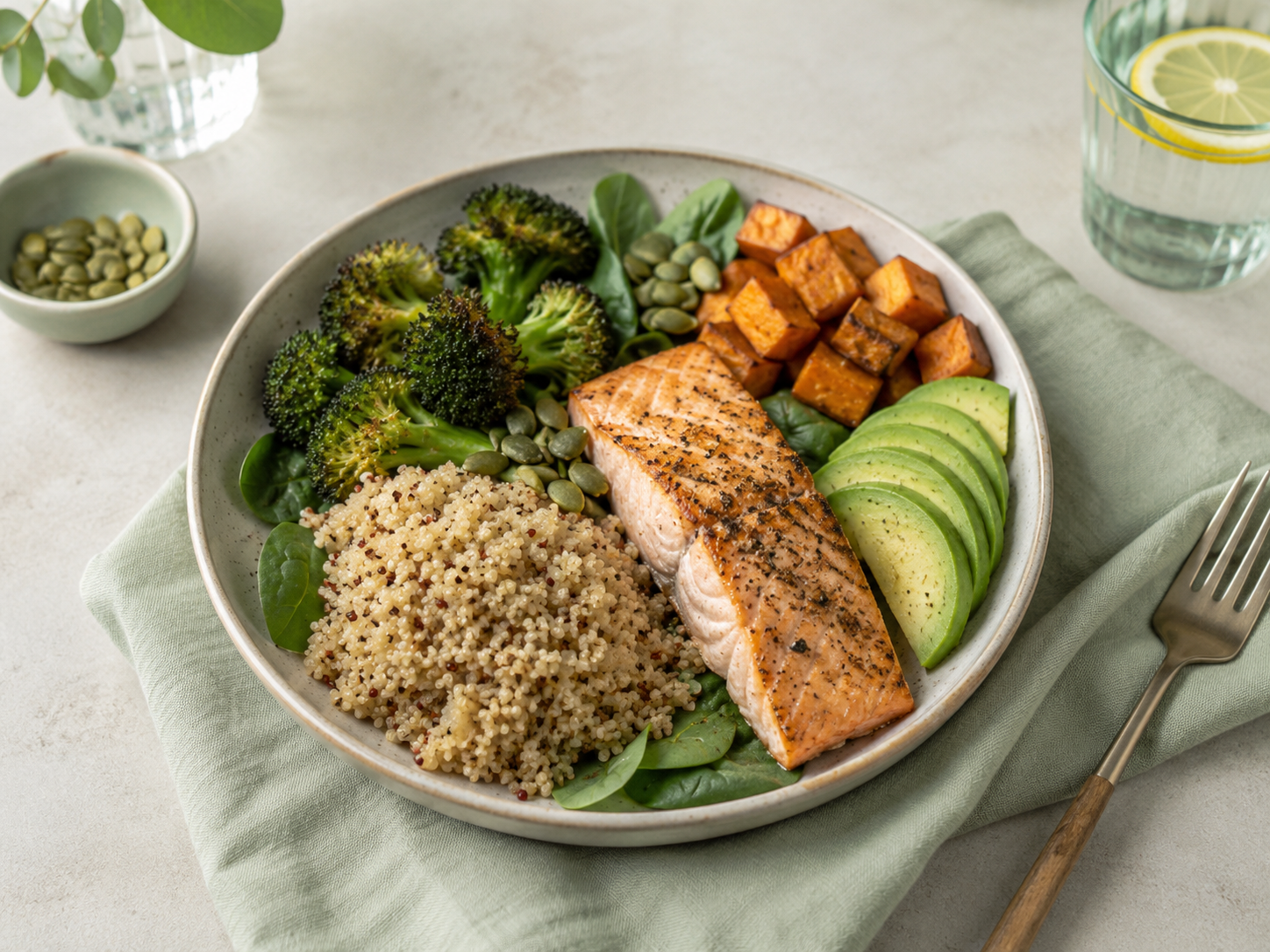
Begin with a balanced plate built around protein, colorful vegetables, fiber-rich carbohydrates and healthy fats—and let consistency matter more than perfection.
One of the fastest ways to become overwhelmed after a Hashimoto’s diagnosis is to search for the perfect diet.
Online advice may tell you to eliminate gluten, dairy, grains, nightshades, soy, sugar, caffeine, or several food groups at once. Some people have additional diagnoses or individual reactions that make specific changes appropriate. But there is no single restrictive eating plan that is right for every person with Hashimoto’s.
The National Institute of Diabetes and Digestive and Kidney Diseases notes that specific dietary and supplement guidance for Hashimoto’s remains limited. It also cautions that very high iodine intake—from products such as kelp or iodine supplements—can worsen thyroid problems in some people with autoimmune thyroid disease.
A more practical starting point is to build meals and routines that support overall nutrition, energy, and consistency without turning food into a daily test you can fail.
Sustainable support often begins with repeatable decisions:
• Include a meaningful source of protein at meals
• Choose a variety of minimally processed foods you tolerate well
• Add fiber-rich plants and carbohydrates gradually when appropriate
• Eat regularly enough to support steady energy
• Protect sleep and recovery
• Use movement that matches your current capacity
• Track patterns without judging every imperfect day
• Review supplements with a qualified healthcare professional rather than building a large stack from internet recommendations
That is why we created the GreenScripts Complete Hashimoto’s Restoration Toolkit. It combines practical education with a seven-day meal plan, shopping list, protein-first plate guide, daily checklist, symptom and habit tracker, thyroid lab tracker, supplement summary, and a 30-day continuation plan—so you can begin with structure instead of trying to rebuild your life overnight.
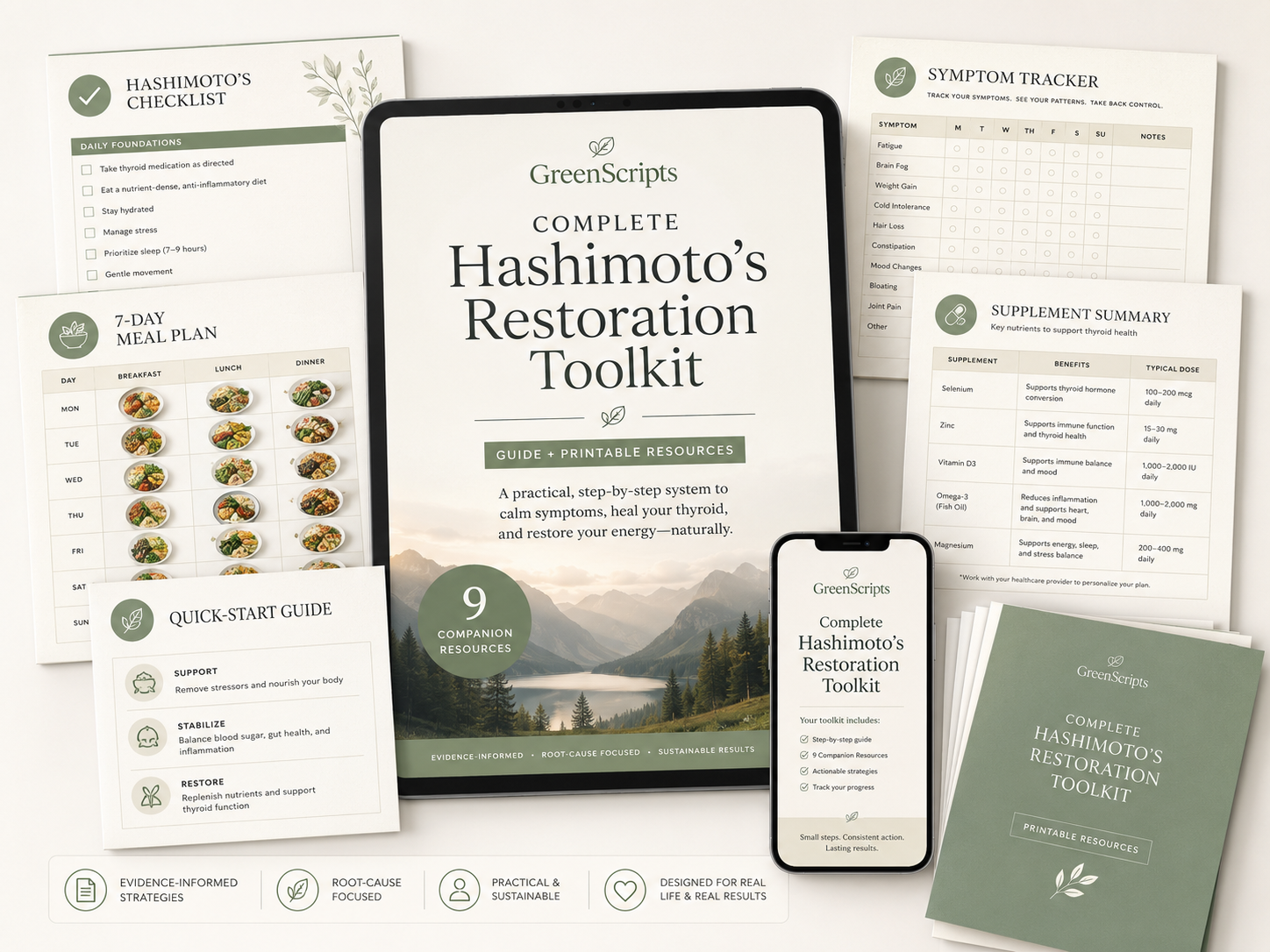
Ready for a clearer place to begin? The Complete Hashimoto’s Restoration Toolkit brings together a step-by-step guide, practical meal-planning support, symptom tracking tools and printable resources designed to help you build consistent, sustainable habits.
“Restoration” Should Mean Support—Not a Promise of a Cure
The word restoration can sound as though the goal is to erase Hashimoto’s completely or guarantee that every symptom will disappear.
That is not what we mean.
Hashimoto’s is a chronic autoimmune condition, and an educational toolkit does not diagnose, treat, reverse, or cure it. Restoration, in the GreenScripts sense, means creating a more supportive foundation: understanding your condition, organizing your questions, observing your patterns, and building routines that are realistic enough to continue.
Seven organized days will not solve every thyroid concern. But seven days can help you:
• Create more balanced meals without chasing a rigid diet
• Notice patterns in energy, digestion, sleep, and symptoms
• Reduce decision fatigue
• Prepare for a more productive medical appointment
• Keep laboratory results and medication questions organized
• Choose a few habits that feel sustainable beyond the first week
That is meaningful progress.
Know When Symptoms Need Prompt Medical Attention
Routine fatigue or brain fog can be frustrating, but some symptoms should not be managed with a wellness plan alone.
Seek prompt medical evaluation for new or significant neck swelling, trouble swallowing or breathing, chest pain, fainting, severe weakness, confusion, a very slow or irregular heartbeat, or rapidly worsening symptoms. Pregnancy and plans for pregnancy also require timely thyroid follow-up because thyroid hormone needs may change.
Never stop, start, or adjust thyroid medication based on a blog post, supplement recommendation, or downloadable guide. Medication decisions belong with the clinician who knows your history and monitors your laboratory results.
Start With the Next Practical Step
You do not need the perfect grocery list, a cabinet full of supplements, or the motivation to change everything at once.
Begin by taking your medication consistently as prescribed. Write down the symptoms you want to discuss. Gather your recent laboratory results. Build one protein-forward breakfast. Take a gentle walk if it feels appropriate. Prepare tomorrow’s lunch before the day becomes busy.
Then choose the next step that fits your situation: continue tracking, schedule a follow-up with your healthcare professional, or use a structured educational plan to organize the first week.
Ready for a More Structured Starting Point?
You do not have to piece everything together on your own.
The Complete Hashimoto’s Restoration Toolkit combines a 40-page core guide with nine practical companion resources to help you understand your thyroid health, organize your next steps, track meaningful patterns, and build sustainable daily habits—without chasing perfection.
Explore the Complete Hashimoto’s Restoration Toolkit
Instant digital access • Complete toolkit for $27 • One-time purchase
For Florida residents seeking individualized clinical guidance, start the GreenScripts assessment here. The educational toolkit is available regardless of location and does not establish a clinician-patient relationship.
Educational disclaimer: This article and the GreenScripts toolkit are provided for general education and wellness support. They are not a diagnosis, prescription, individualized treatment plan, or substitute for care from a licensed healthcare professional.
